



You’re in London, your phone dies… and suddenly you have no idea where you are.
No Google Maps, no translator.
You look around: people walking quickly, signs in English everywhere, buses driving past without stopping. For a moment, you think: “Okay… now what?”
It’s just you, the city… and your English. Having a few basic phrases already in mind can make all the difference when it comes to finding your way around and handling whatever situation comes your way.
Why it matters
Knowing how to ask for information and directions in English isn’t only important in the (rare) event that you actually get lost.
In fact, it’s one of the first real opportunities you’ll have to use English in everyday life – and one of the few situations in which most of us will actually get to interact with a native speaker.
It’s the moment when you have to put yourself out there and remember all those expressions you learnt at school.
It’s an experience that can make us feel on top of the world (if it goes well) or completely destroy our confidence (if we can’t string two words together). In short, it can be as frightening as it is necessary.
But how can we make sure everything goes as smoothly as possible?
Often, all it takes is one simple question to break the ice.
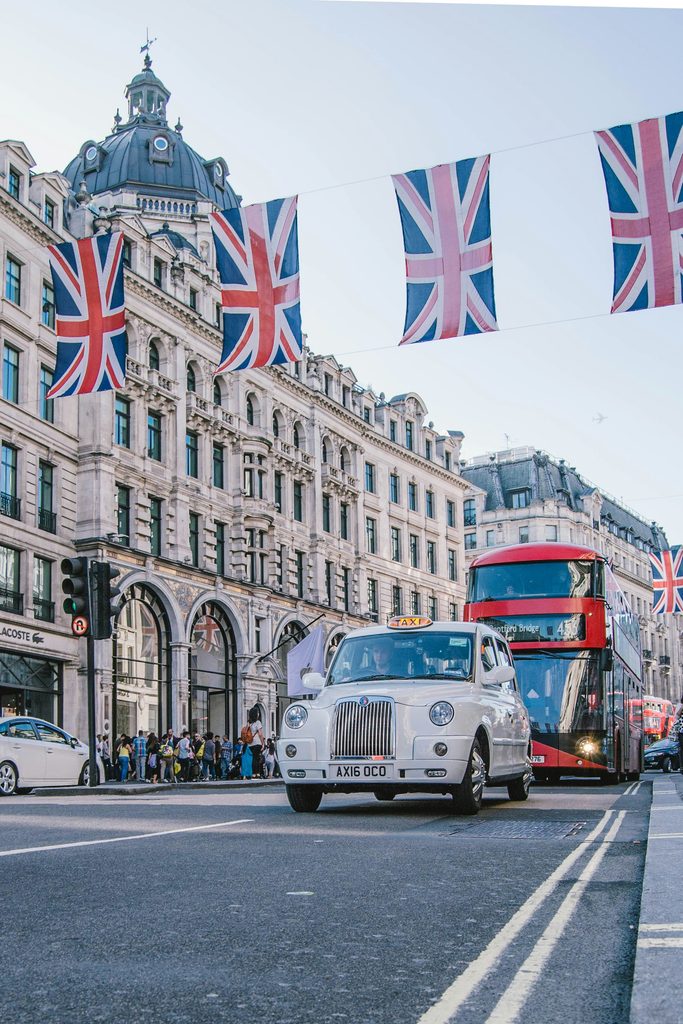
The problem (and the solution)
Precisely because these situations are often the first – and sometimes the only – occasions when we speak English, they can feel overwhelming and almost impossible to face. We’re not used to it, the words don’t come naturally, and the fear of making a mistake takes over, making even the simplest interactions feel much more complicated than they really are.
Are you worried about embarrassing yourself, not understanding the answer, or the other person speaking too quickly?
Of course you are.
The good news? You don’t have to be perfect.
With a few useful phrases and a little courage, you can turn a stressful moment… into a small personal victory. And perhaps even into the first step towards more fluent, natural English.
Getting someone’s attention
First things first: you need to stop someone.
In English, politeness is essential (read our article about being polite in English, here!). It’s not simply a question of good manners: it’s the natural way to start a conversation.
For example:
- Excuse me… Used politely to get someone’s attention, especially before asking a question or making a request.
- Sorry to bother you… Used to politely acknowledge that you are interrupting or inconveniencing someone.
- Pardon me… A polite expression used to attract someone’s attention or apologise for interrupting.
Using one of these phrases immediately makes you sound more natural and increases the chances that someone will be happy to help you. It shows openness, politeness, and a willingness to communicate – all things that put the other person at ease and make them more receptive towards you.
Asking the right question
- Can you help me..? Used to ask someone for assistance.
- Excuse me, where is….? Used to politely ask for the location of a place or thing.
- How can I get to….? / How do I get to…? Used to ask for directions to a particular place.
- Is it near there? / Are they near here? Used to ask whether a place or places are close to a particular location.
- Can you show me? Used to ask someone to indicate or demonstrate where something is.
- Is it far? Used to ask whether a destination is a long distance away.
- What street is this? Used to ask for the name of the street you are currently on.
- Which way is it? Used to ask which direction you should take to reach a place.
Understanding the answer
Asking the question is only half the job: the other half – and often the most difficult – is understanding the answer.
When someone gives you directions, they’ll probably speak at a natural speed, using simple phrases that may nevertheless be different from the ones you find in textbooks. And this is exactly where many learners get stuck: not so much when speaking, but when trying to understand.
The good news is that you don’t need to understand every word. You just need to recognise a few key phrases that come up frequently and can help you find your way, even when they’re used as part of a longer answer.
- Go straight Continue moving in the same direction without turning.
- Turn left/right Change direction by moving to the left or right.
- It’s on the corner Used to say that a place is situated where two streets meet.
- It’s next to… Used to say that something is immediately beside another place or thing.
- It’s in front of… Used to say that something is directly before or facing another place or thing.
- (It’s) near… Used to say that something is a short distance from another place or thing.
- You’ll find (it)… Used when explaining where someone can locate a particular place or thing.
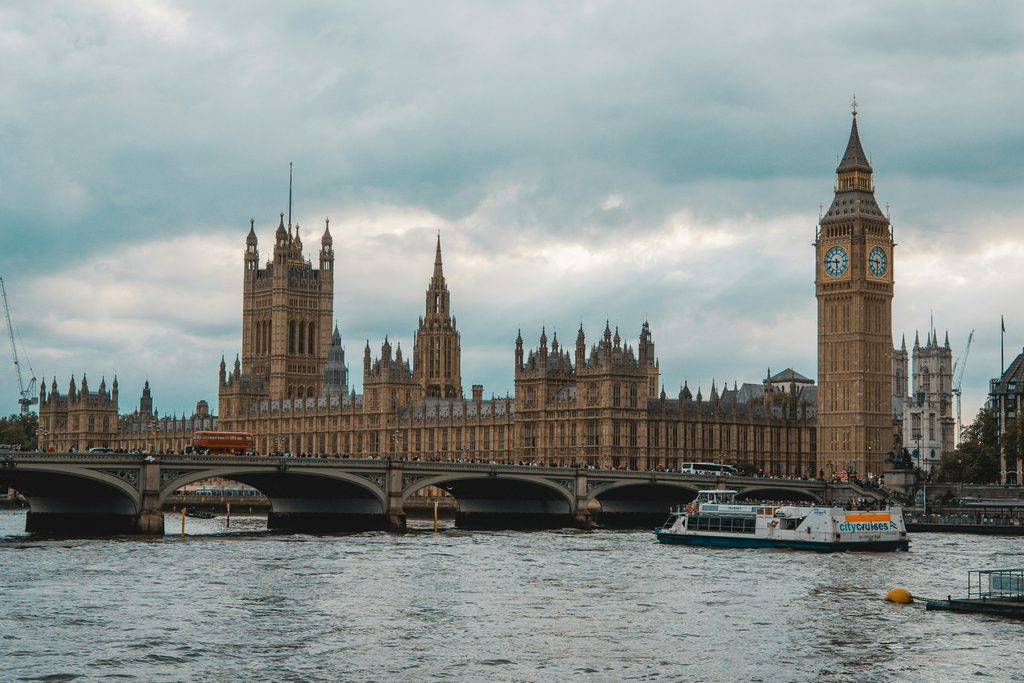
Imagine the scene
You’ve just arrived at Victoria Station. Backpack on your shoulders, a little tired from the journey, but also excited to start exploring London.
You have a specific destination in mind: Buckingham Palace.
You walk out of the station and look around… but there’s no phone, no maps. Just unfamiliar streets and signs in English.
You spot a police officer – a classic London bobby. It’s time to give it a go.
You walk over and say:
- Excuse me, how do I get to Buckingham Palace? A polite way of asking someone for directions to Buckingham Palace.
- Go straight, then turn left. It’s next to the park. Continue straight ahead, then turn to the left; the destination is beside the park.
Maybe you don’t understand every single word… but you get the idea. Straight ahead, then left.
And at that moment, something important happens: you’ve just made it through your first real conversation in English. Maybe it wasn’t perfect. But it was real.
And most importantly… it worked, because Buckingham Palace is right there in front of you, in all its royal glory.
You almost feel like having tea with King Charles.
Maybe not, but… let’s keep going.
From Buckingham Palace, you make your way towards St James’s Park. You want to make sure you’re heading in the right direction towards Westminster and the London Eye. You stop a passer-by and…
- Sorry to bother you… is this the way to Westminster Bridge? A polite way of asking whether you are heading in the correct direction for Westminster Bridge.
- Yes, keep going straight. Continue moving straight ahead without changing direction.
Bingo! Who needs Google Maps?

Before you leave
Before your next trip to London, save this article and this list of useful words.
These are words you’re likely to use frequently when asking for directions and finding your way around the city. Knowing them will help you ask clearer questions… and understand the answers more easily.
Useful verbs
- Turn – To change direction, especially by moving to the left or right.
- Go – To move or travel from one place to another.
- Keep going – To continue moving in the same direction or towards a destination.
- Continue – To keep doing something or moving without stopping.
- Stop – To cease moving or travelling.
- Take – To follow or use a particular road, route, or form of transport.
One last fun fact
Before you go, here’s one small detail that will immediately make you sound a little more “local”.
In London, the underground railway isn’t called the subway o metro: everyone calls it the Tube.
It’s a name unique to London, inspired by the shape of its tunnels.
But London isn’t the only city with its own name for the underground.
- In Chicago, the elevated railway is called “The L” (from elevated).
- In Milan, people simply say “la metro”.
- In Paris, it’s called “le métro”.
- In New York, you’ll hear “subway”.
- In Mexico City, it’s called “Metro” (or el Metro).
Knowing these little differences is one of the easiest ways to feel less like a tourist and more like part of the place.
And the next time you ask for directions in London, perhaps you’ll find yourself naturally saying: “Where is the nearest Tube station?”

